Evolve Psychiatry · REMS-Certified Treatment Center
SPRAVATO® (esketamine) CIII Nasal Spray
A fast-acting, FDA-approved treatment for adults with treatment-resistant depression, administered on-site under direct medical supervision.
- New Patients: Consultation is required. Please schedule an appointment above.
- Existing Patients: Bring up SPRAVATO with your provider at your next psychiatric appointment.
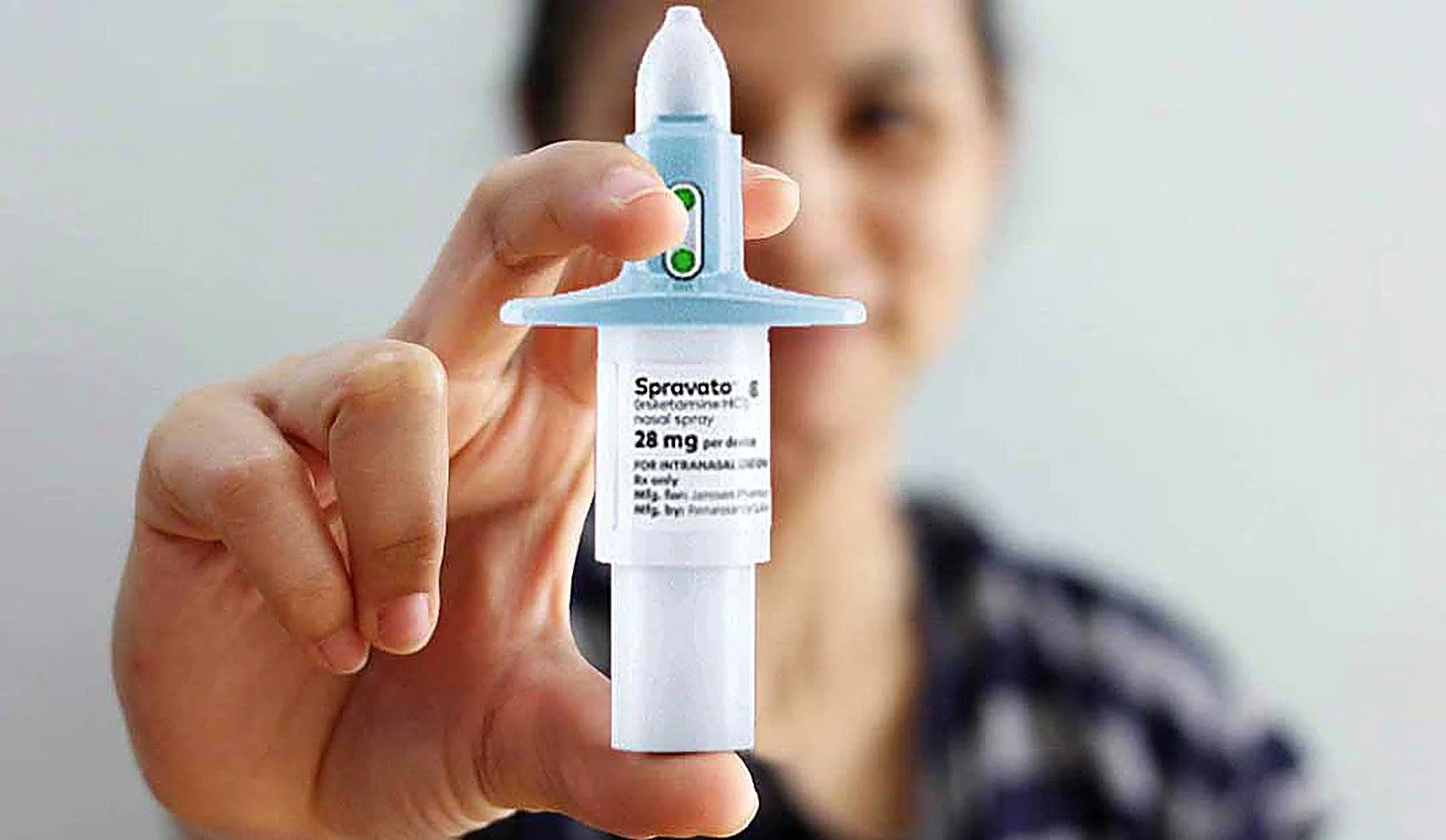
What Is SPRAVATO?
A different kind of treatment for depression that hasn't responded to standard antidepressants.
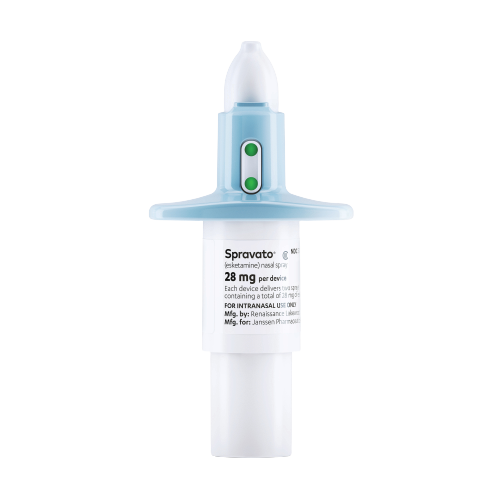
SPRAVATO® (esketamine) CIII nasal spray is a non-competitive NMDA receptor antagonist — a first-of-its-kind FDA-approved medicine for two subpopulations of adults with major depressive disorder (MDD) with high unmet need. Used in conjunction with an oral antidepressant, it's approved to treat:
- Treatment-resistant depression (TRD) in adults
- Depressive symptoms in adults with MDD with acute suicidal ideation or behavior
While SPRAVATO and ketamine are chemically related, SPRAVATO is not the same as IV ketamine — it is the only one of the two that has undergone extensive controlled clinical trials informing its FDA approval. SPRAVATO has not been shown to prevent suicide or reduce suicidal ideation on its own, and does not replace hospitalization when clinically needed. It is not approved as an anesthetic or for use in children.
Boxed Warning: Sedation, Dissociation, Abuse & Misuse, Suicidal Thoughts and Behaviors
SPRAVATO carries serious risks and is available only through the restricted SPRAVATO REMS Program. Every dose is administered in our office with at least two hours of monitoring afterward — SPRAVATO is never taken home. Please review the full Important Safety Information below, the Prescribing Information, and Medication Guide.
Your Treatment Visit
Every session takes place in our REMS-certified office, under direct medical supervision.
Check-In & Vitals
We check your blood pressure and review how you're feeling before every dose.
Self-Administer, Supervised
You give yourself the nasal spray while a provider guides you through each device.
2-Hour Monitoring
You rest in a comfortable treatment room while we monitor blood pressure and how you feel.
Discharge & Ride Home
Once cleared by our provider, you'll need someone to drive you home — no driving until the next day.
Patient Stories
Real experiences from people who've been through SPRAVATO treatment.
SPRAVATO helped Nicole's treatment-resistant depression. Now she's resuming her education and sharing her story.
Allison's son tried many oral antidepressants without relief. With SPRAVATO, he's starting to feel like himself again.
Available at All Evolve Psychiatry Locations
SPRAVATO is currently offered at every Evolve Psychiatry office listed below.
Curious if SPRAVATO could help you?
Schedule a consultation with one of our providers to find out if you're a candidate.
Request a ConsultationImportant Safety Information
What is SPRAVATO® (esketamine) CIII nasal spray?
SPRAVATO® is a prescription medicine, used along with an antidepressant taken by mouth to treat:
- Adults with treatment-resistant depression (TRD)
- Depressive symptoms in adults with major depressive disorder (MDD) with suicidal thoughts or actions
SPRAVATO® is not for use as a medicine to prevent or relieve pain (anesthetic). It is not known if SPRAVATO® is safe or effective as an anesthetic medicine.
It is not known if SPRAVATO® is safe and effective for use in preventing suicide or in reducing suicidal thoughts or actions. SPRAVATO® is not for use in place of hospitalization if your healthcare provider determines that hospitalization is needed, even if improvement is experienced after the first dose of SPRAVATO®.
It is not known if SPRAVATO® is safe and effective in children.
What is the most important information I should know about SPRAVATO®?
SPRAVATO® can cause serious side effects, including:
- Sedation and dissociation. SPRAVATO® may cause sleepiness (sedation), fainting, dizziness, spinning sensation, anxiety, or feeling disconnected from yourself, your thoughts, feelings, space and time (dissociation).
- Tell your healthcare provider right away if you feel like you cannot stay awake or if you feel like you are going to pass out.
- Your healthcare provider must monitor you for serious side effects for at least 2 hours after taking SPRAVATO®. Your healthcare provider will decide when you are ready to leave the healthcare setting.
- Abuse and misuse. There is a risk for abuse and physical and psychological dependence with SPRAVATO® treatment. Your healthcare provider should check you for signs of abuse and dependence before and during treatment with SPRAVATO®.
- Tell your healthcare provider if you have ever abused or been dependent on alcohol, prescription medicines, or street drugs.
- Your healthcare provider can tell you more about the differences between physical and psychological dependence and drug addiction.
- SPRAVATO® Risk Evaluation and Mitigation Strategy (REMS). Because of the risks for sedation, dissociation, and abuse and misuse, SPRAVATO® is only available through a restricted program called the SPRAVATO® Risk Evaluation and Mitigation Strategy (REMS) Program. SPRAVATO® can only be administered at healthcare settings certified in the SPRAVATO® REMS Program. Patients treated in outpatient healthcare settings (e.g., medical offices and clinics) must be enrolled in the program.
- Increased risk of suicidal thoughts and actions. Antidepressant medicines may increase suicidal thoughts and actions in some people 24 years of age and younger, especially within the first few months of treatment or when the dose is changed. SPRAVATO® is not for use in children.
- Depression and other serious mental illnesses are the most important causes of suicidal thoughts and actions. Some people may have a higher risk of having suicidal thoughts and actions, including people who have (or have a family history of) depression or a history of suicidal thoughts and actions.
How can I watch for and try to prevent suicidal thoughts and actions in myself or a family member?
- Pay close attention to any changes, especially sudden changes, in mood, behavior, thoughts, or feelings, or if you develop suicidal thoughts or actions.
- Tell your healthcare provider right away if you have any new or sudden changes in mood, behavior, thoughts, or feelings.
- Keep all follow-up visits with your healthcare provider as scheduled. Call your healthcare provider between visits as needed, especially if you have concerns about symptoms.
Tell your healthcare provider right away if you or your family member have any of the following symptoms, especially if they are new, worse, or worry you: suicide attempts; thoughts about suicide or dying; worsening depression; other unusual changes in behavior or mood.
Do not take SPRAVATO® if you:
- have blood vessel (aneurysmal vascular) disease (including in the brain, chest, abdominal aorta, arms and legs)
- have an abnormal connection between your veins and arteries (arteriovenous malformation)
- have a history of bleeding in the brain
- are allergic to esketamine, ketamine, or any of the other ingredients in SPRAVATO®
If you are not sure if you have any of the above conditions, talk to your healthcare provider before taking SPRAVATO®.
Before you take SPRAVATO®, tell your healthcare provider about all of your medical conditions, including if you:
- have heart or brain problems, including: high blood pressure (hypertension); slow or fast heartbeats that cause shortness of breath, chest pain, lightheadedness, or fainting; history of heart attack; history of stroke; heart valve disease or heart failure; history of brain injury or any condition where there is increased pressure in the brain
- have liver problems
- have ever had a condition called “psychosis” (see, feel, or hear things that are not there, or believe in things that are not true)
- are pregnant or plan to become pregnant — SPRAVATO® may harm your baby, and you should not take SPRAVATO® if you are pregnant. Tell your healthcare provider right away if you become pregnant during treatment. There is a pregnancy registry for women exposed to SPRAVATO® during pregnancy — ask your provider about registering with the National Pregnancy Registry for Antidepressants at 1-844-405-6185 or online at womensmentalhealth.org.
- are breastfeeding or plan to breastfeed — you should not breastfeed during treatment with SPRAVATO®
Tell your healthcare provider about all the medicines you take, including prescription and over-the-counter medicines, vitamins, and herbal supplements — especially central nervous system (CNS) depressants, psychostimulants, or monoamine oxidase inhibitors (MAOIs).
How will I take SPRAVATO®?
- You will take SPRAVATO® nasal spray yourself, under the supervision of a healthcare provider in a healthcare setting.
- Your healthcare provider will show you how to use the device, and tell you how much to take and when.
- Follow your treatment schedule exactly as your healthcare provider tells you to.
- You will be checked by a healthcare provider during and after each use, who will decide when you are ready to leave.
- You will need a caregiver or family member to drive you home after taking SPRAVATO®.
- If you miss a treatment, your healthcare provider may change your dose and schedule.
- Some people get nausea and vomiting — avoid eating for at least 2 hours before, and avoid drinking liquids for at least 30 minutes before, taking SPRAVATO®.
- If you take a nasal corticosteroid or nasal decongestant, take it at least 1 hour before SPRAVATO®.
What should I avoid while taking SPRAVATO®?
Do not drive, operate machinery, or do anything where you need to be completely alert after taking SPRAVATO®. Do not take part in these activities until the next day following a restful sleep.
What are the possible side effects of SPRAVATO®?
SPRAVATO® may cause serious side effects, including:
- Increased blood pressure. SPRAVATO® can cause a temporary increase in blood pressure lasting about 4 hours after a dose. Your provider will check your blood pressure before and for at least 2 hours after treatment. Tell your provider right away if you get chest pain, shortness of breath, sudden severe headache, change in vision, or seizures.
- Problems with thinking clearly. Tell your provider if you have problems thinking or remembering.
- Bladder problems. Tell your provider if you develop trouble urinating, such as a frequent or urgent need to urinate, pain when urinating, or urinating frequently at night.
The most common side effects of SPRAVATO® when used along with an antidepressant taken by mouth include: feeling disconnected from yourself, your thoughts, feelings, and things around you; dizziness; nausea; feeling sleepy; spinning sensation; decreased feeling of sensitivity (numbness); feeling anxious; lack of energy; increased blood pressure; vomiting; feeling drunk; and feeling very happy or excited.
If these common side effects occur, they usually happen right after taking SPRAVATO® and go away the same day. These are not all the possible side effects of SPRAVATO®. Call your doctor for medical advice about side effects. You may report side effects to FDA at 1-800-FDA-1088.
Please see full Prescribing Information, including Boxed WARNINGS, and Medication Guide for SPRAVATO®, and discuss any questions with your healthcare provider.
Recent posts